Why are Airbnb and holiday homes changing investment strategies in Dubai’s Real Estate Market? Within the recent property scene of Dubai, you must have felt that a change is occurring beneath the feet of all. Days when the only game in town was traditional, long-term leasing are long gone. Short-term rentals, particularly Airbnb-type accommodation, are redefining the terms for investors, property owners and indeed the everyday traveller. So what’s driving this shift? Why are increasing numbers of people considering holiday homes rather than the normal rent-outs? We shall jump in and see what is actually happening in one of the most vibrant real estate markets in the world.
Dubai Tourism Boom Affecting Dubai’s Real Estate Market
Honesty is key; Dubai’s Real Estate Market has never lacked crowds. However, the image of the city as an international tourist and business destination and a luxury event and lifestyle destination has increased tremendously over the last couple of years. With world-shopping festivals, international expos, year-round conventions, and so on, there is never anything boring. Every year, millions of visitors come to visit, and the short-term accommodation is in demand in the locations of the first choice.
This constant supply of travellers is the natural source of the short-term rental business. All business people, digital nomads, families on vacation and visitors on a long weekend seek out flexible accommodation that feels comfortable, convenient and personal. STAs are able to satisfy such needs that traditional hotels cannot always satisfy.
Investors Are Paying Attention to Dubai’s Real Estate Market
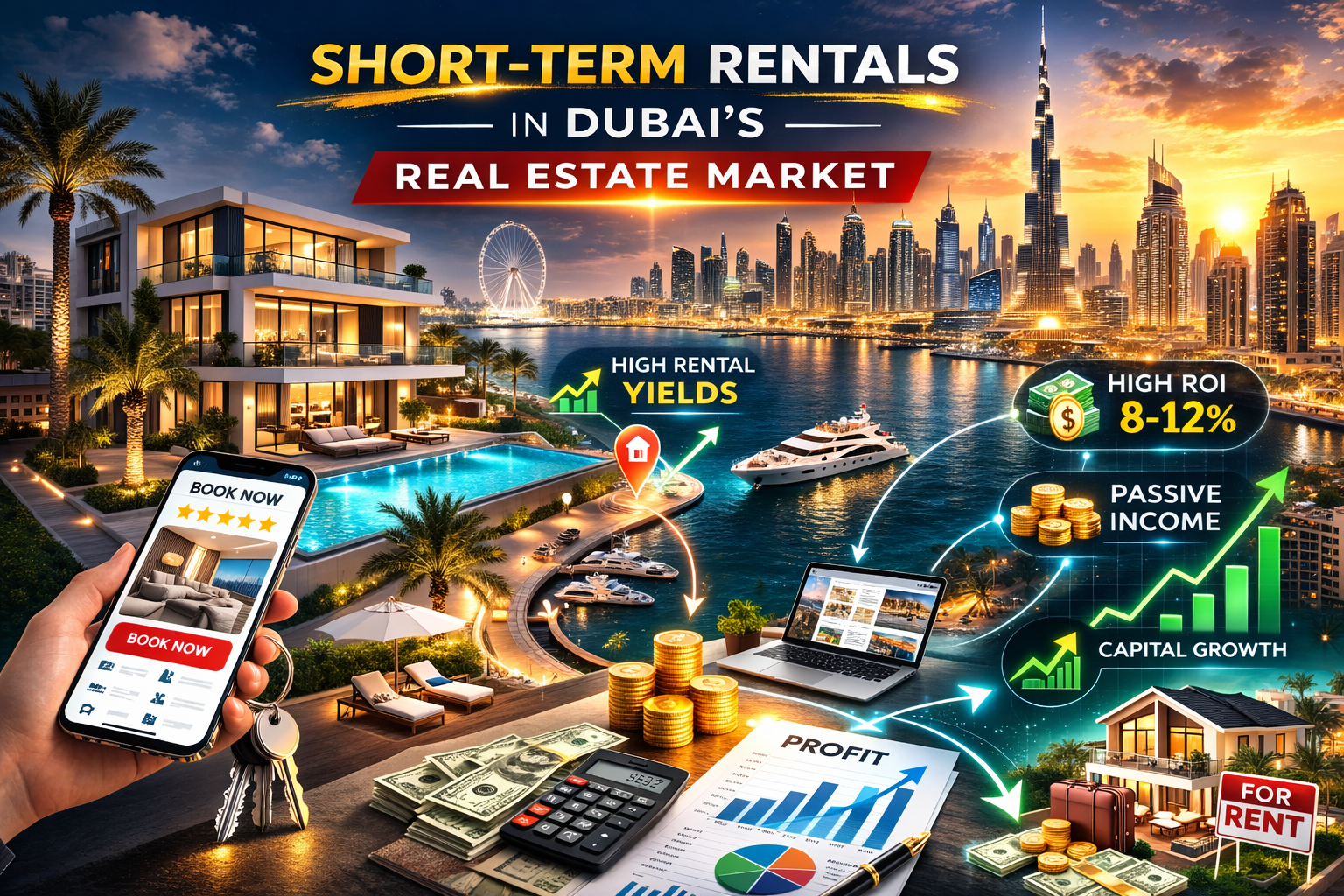
This is where the discussion is particularly interesting to investors. Although long-term rentals are more stable with more predictable cash flow, short-term rentals can be more lucrative, especially in major neighbourhoods like Dubai Marina, Downtown Dubai, Business Bay, and Palm Jumeirah.
The professionally managed and well-situated property in the busy seasons can earn much more monthly revenue than a permanent lease of a year can earn. Owners have the opportunity to change the nightly rates according to demand, special events or spikes in the tourism business, and the revenues are dynamic and not fixed at any price throughout the year.
To the majority of investors, such flexibility opens the prospect of better yields and quicker ROI. It also enables the owners to occasionally utilise their own property when it is not in use, something you just do not get with a long-term tenant.
Guest Preference Is Being Fuelled by Lifestyle Appeal in Dubai’s Real Estate Market..
In addition to financial factors, the market is being influenced by the behaviour of the guests. Travellers no longer desire a bed and a minibar. They desire space, privacy, kitchens, balconies, parking, and neighbourhood access, as well as flexibility in workspace.
Short-term rentals are more lived-in – a location where you can prepare your own breakfast, sit on the sofa, or see the skyline without being pressed to hotel timetables. Families love the space. Business travellers enjoy the serenity and comfort. The visitors with long stays like to have a routine and familiarity.
Such a change in lifestyle expectations sustains the high demand and promotes repeat bookings, particularly in a city as rich and diverse as Dubai’s Real Estate Market.
Regulation and Technology Are Facilitating Growth.
Dubai’s Real Estate Market has been proactive in the control of holiday homes. Proper licensing and rules of compliance provide property owners with confidence and also provide uniformity in the standards of the guests. This regulatory transparency has assisted in legitimising the short-term rental industry and encouraging more professional players into the industry.
Simultaneously, technology has made management very easy. Smart locks and automated check-ins, dynamic pricing software and professional cleaning organisations – today, managing a short-term rental is much easier than it was a few years ago.
A significant number of investors are now collaborating with specialised property management firms that take care of the entire process of guest communication and maintenance, marketing and compliance with regulations. This will enable owners to enjoy the potential of earning without being bound to the day-to-day working problems.
Understanding the Challenges
Naturally, there are no investment models that do not have challenges. Growth of popularity increases competition, especially in highly developed regions. Occupancy can be reduced during lower seasons unless pricing or marketing strategies are optimised.
More operating costs are also to be considered, such as the management charge, maintenance, upgrades of the furnishings, cleaning costs and commissioning the platform.
What the Future Looks Like
Short-term rentals have ceased being a transient trend in Dubai’s Real Estate Market, and the practice is here to stay. With the trend in tourism towards an ever-increasing growth and flexible living as the new form of life, the holiday homes will be appealing to both investors and travellers.
The development of new neighbourhoods, better infrastructure, and wiser property technology will probably keep developing this industry. Those investors who remain updated can adjust fast and conform to the advice of seasoned advisors and will be in a good position to achieve long-term value.
Final Thoughts: Short-Term Rentals in Dubai
At NextHouse, we assist investors in making bold decisions on the property based on critical market understanding, planning and customised investment advice. Our team is ready to accompany you, whether it is in the process of exploring short-term rental opportunities in Dubai or adding value to an already existing portfolio.
Ready to explore smarter property investments? Let’s build your next move together.
Disclaimer: This report is for educational and informational purposes only. It does not constitute financial, investment, or legal advice. Always seek professional advice before making property decisions.