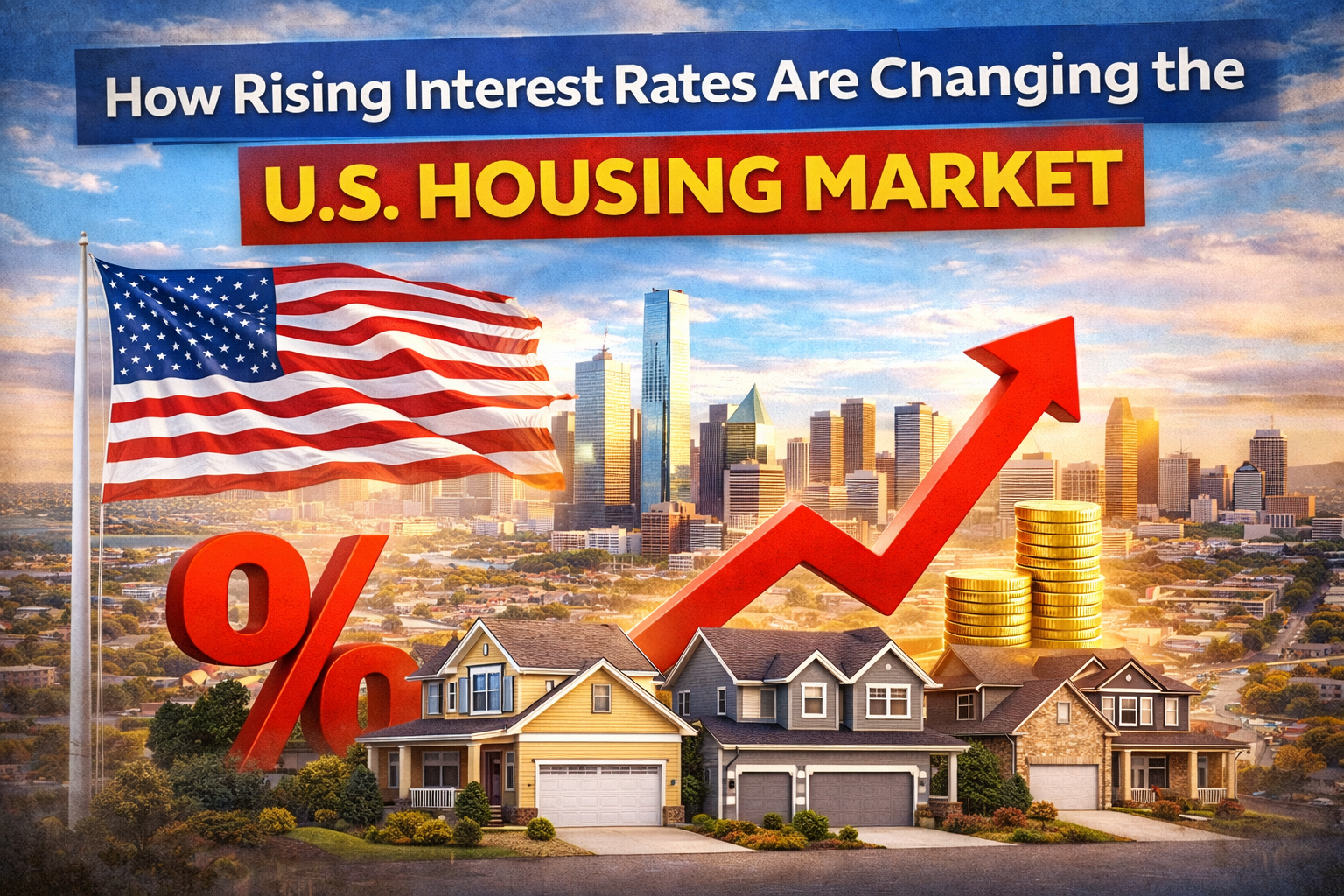

In case you have been monitoring the U.S. Housing Market 2026, you must have observed something interesting. The mayhem of bidding wars, lightning sales and jaw-dropping price increments has finally slowed. Not disappeared — just… calmed. The big question that everybody has in 2026, then, is straightforward: are the home prices closing or are they resurgent?
The honest answer? A bit of each – and that is where you happen to be peeking. Let us put it in real-life terms.
A Calmer U.S. Housing Market in 2026
The U.S. Housing Market 2026 will head towards equilibrium, after a number of years of aggressive growth. Home prices in the country have been growing at a more sustainable rate, and most of the forecasts indicate growth at a slow rate as opposed to the dramatic increments. Rather than an increase in price by 10-15 per cent in a year, most areas are recording an increase of about 1 to 3 per cent per year.
That is not as dramatic, but to the buyers who seemed to be permanently driven out of the market in the boom years, this cooling momentum is almost coming as a breath of fresh air. Houses are not becoming cheaper overnight, but the inflation has calmed down.
To sellers and investors, this implies that pricing is more important than ever. Expensive houses are taking longer to sell, whereas relatively priced houses are receiving stable attention.
Mortgage Rates Still Shape Buyer Behaviour
Mortgage interest rates are one of the largest sources of housing affordability. Rates are gradually easing off their recent highs, but they are high as compared to the ultra-low rates during much of the former decade.
This has brought about cautious buyer behaviour. Customers are doing their monthly bills and taking the long-term affordability into consideration before making impulsive buys. Consequently, the property market in 2026 is more calculated and economical.
Meanwhile, those who secured extremely low interest rates several years ago are holding onto their homes and will still not sell, which restricts the supply of homes in certain regions. This maintains supply in the select markets, which supports prices even as the demand normalises.
Housing Inventory Is Slowly Improving
One of the positive factors for the buyers is the slow increase in housing inventory. More and more homeowners are finally selling houses due to changes in their lives, relocating to a new job, downsizing or just plain being comfortable making another change.
The level of inventory has not returned to its pre-pandemic rates, but the trend is on the right, which adds to the reduced competition and enhanced buyer choice. The buyers no longer have to be in a situation of multiple offers since they have time to weigh the properties and negotiate as well as make decisions they are confident with.
This is trending towards creating a more balanced prospect in the U.S. Housing Market 2026, especially in the suburban areas and middle-sized cities.
Regional Housing Market Trends Continued to Matter
Something that has not changed: real estate is very local. National averages are a fallacy. There are still some areas that still enjoy a high demand, which can be attributed to the increase in population, the growth of jobs or low construction. It is possible that these regions can experience price growth that is higher than the national average.
In the meantime, the markets that grew quickly in the last several years can either level off their growth or make mini adjustments since the supply increases and matches the demand.
Should It Be a Good Time to Buy Property in 2026?
To most consumers, 2026 is an opportunity. It is not a bustling market, and the inventory is on the rise, and the price growth is more predictable. Affordability is an issue in the big cities, though buyers are in a better position than they have been in years.
Buyers will have key benefits such as:
- More listings than in recent years.
- Less competition in most markets.
- Slower home price growth
- Increased bargaining space.
With that said, good financial planning, a realistic budget, and a long outlook are still required by buyers. Gone are the days of easy money through quick appreciation, and in its place, there has been slow, sustainable growth.
Prospects of Property Investors
To investors, the U.S. Housing Market 2026 is a secure place and not a speculative one. In most areas, there are high levels of rental demand, especially around workplaces and higher institutions of learning. With long-term cash flow and consistent growth, investors can also find good opportunities.
The markets with increasing population, investing in infrastructure and scarce supply of housing remain investors’ favourites. As usual, it is important to conduct careful market research and risk assessment.
Cooling or Rising? The Real Answer
The reality of it is that prices are stabilising, not crashing and not going out of control. A slight growth in price is likely to be experienced in most of the markets owing to the stable demand and low supply of houses. The violent speed of the last few years has declined, and the buyers and sellers are now able to operate within a less irrational space.
This is a win-win situation; this market is balanced:
- The buyers become flexible and confident.
- Sellers are seriously qualified buyers.
- Investors will be able to make predictions more easily.
- Societies grow in healthier ways.
It might not lead to headliners, but stability is what most people have been yearning for.
Why NextHouse Keeps a Close Eye on Global Property Trends
NextHouse is a company that monitors the international trends in the real estate market to assist investors and buyers in making the right choice. Knowledge of the U.S. Housing Market 2026 perspective, interest rate movement, and geographical expansion enables our customers to discover cross-border smart opportunities.
Researching property investment, diversification strategies, or long-term wealth planning, keeping up would make you most powerful.
NextHouse is willing to take you on a journey of global real estate that will make you explore with confidence.
Disclaimer: This report is for educational and informational purposes only. It does not constitute financial, investment, or legal advice. Always seek professional advice before making property decisions.